Snapdragons: Plant in Fall for Fragrance in Spring


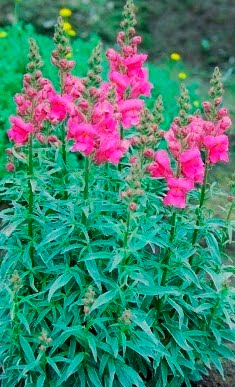
In spring we receive many compliments for the beautiful snapdragons growing in our garden. But to have tall fragrant snapdragons in the spring garden, you must plant them in the fall.


Snapdragons enjoy sunlight, but partial shade is best in the deep south. I have found my snapdragons to bloom best with morning sun and afternoon shade or a little filtered sun all day.


Snapdragons prefer a fluffy, nutrient-rich soil. When planting, mix in enough compost or humus to make a fluffy mixture that will not compact. This ensures good root growth which will in turn provide lots of top-growth and blooms.


Snapdragons are not very drought tolerant, so water weekly in the absence of rainfall.

Saxifrage: Saxifraga, Strawberry Geranium, Strawberry Begonia


Saxifrage possibly has more common names than any other plant I know. Perhaps that's because this plant is also one of the most versatile plants one can grow. 

Whether you know Saxifrage as saxifraga stolonifera, strawberry begonia, strawberry geranium, mother of thousands, or one of the many other names, you must agree that this is a wonderful little plant. 

Often grown as a houseplant by our grandmothers, Saxifrage is hardy in the garden all over the southeastern United States. When grown outdoors, saxifrage could not be any easier! Provide shade and soft moist soil, and she will reward you with many little plants. Saxifrage multiplies by sending out little plantlets on runners just as strawberry plants do. 


Saxifrage forms an evergreen mat of ground-hugging foliage about 4 inches tall. Foliage is very attractive--scalloped deep green leaves are mottled with a silver veining and can have purplish undersides.

Flowers look like little soft pink butterflies fluttering well above the foliage. 

Saxifrage prefers moist, rich soil in full shade. Grow it with ferns and other moisture loving shade plants in the woodland garden. 


Lovely as an easy care houseplant. Especially nice in hanging baskets. Hardy outdoors in USDA Zones 6-9. For more information on this and other easy to grow shade plants, visit us at Shady Gardens Nursery.


Xeriscape Gardening with Companion Plants


Georgia gardeners are becoming increasingly concerned about water conservation due to recent extreme droughts. But since lately we've received a little bit too much rain here in Georgia, I considered a practice we've tried to stick to here in our garden for a few years now: Companion Planting. Now I'm not talking about  what you might be thinking--companion planting as laid out in organic gardening books to promote heavy yields in the vegetable garden. What I'm talking about is simply planting moisture loving plants all together, to make watering easier with less waste. 

Shown in the photo above is Helianthus angustifolius Gold Lace, our native American Swamp Sunflower, with Colocasia Black Magic. What a striking contrast, and they both enjoy the soaking rains we've received lately.

Choose moisture lovers wisely and sparingly. Then place them in groups, preferably where the occasionally received rain water collects, but certainly where you can reach them easily with a hose.

For a list of plants that enjoy wet soil, visit Shady Gardens Nursery.

Green Gardening

Going green in the garden is becoming more and more important to us as we learn additional dangers of pesticide use. To grow a good garden, we must preserve the life in the soil. Healthy soil is full of microorganisms which help to grow more vigorous plants. Too much fertilizer can kill microorganisms. To grow healthy plants, whether your passion is food crops or beautiful ornamentals, you must build up the soil.
  • Add compost--composted manure contains much more beneficial microorganisms than just regular compost.
  • Mulch with organic or plant based mulches (shredded bark or leaves).
  • Believe it or not, applications of horticultural molasses will feed the microorganisms.
  • Cornmeal added to the soil feeds a certain fungus that helps fight plant diseases. Isn't that fascinating? Now I know what to do with that cornmeal I forgot about in the back of the cabinet.
  • While we are feeding our soil microorganisms, we must also remember to protect them.
  • Synthetic fertilizers harm the soil organisms and should be avoided.
  • Over tilling the soil breaks down the soil ecosystem, so add mulch instead. I know I mentioned mulch already, but application of good organic mulch is important enough to mention twice. Mulch attracts the soil critters like earthworms who will till the soil for you.

Rhododendron My Mary: Fragrant Yellow Azalea


Rhododendron 'My Mary' is a new plant for me. Aside from the large and very fragrant yellow blooms appearing in April, the romantic story behind the name compelled me to plant this one.

'My Mary' is a deciduous hybrid azalea--a cross between Rhododendron Nacoochee and Rhododendron Austrinum (the native Florida Flame Azalea.) As written above, the blooms are large and very fragrant--a beautiful yellow funnel-shaped flower with an orange tube. The flowers are borne in clusters, or bouquets, as I like to call them. As you might imagine, pollinators of every sort just love them!

Rhododendron 'My Mary' was developed by the well-respected Mr. George Beasley of Lavonia, Georgia, who named this plant after his wife, Mary. She must indeed be lovely, to have such a plant named in her honor. I'm proud to have this shrub in my humble garden.

Hardy in USDA Zones 5-8, this deciduous rhododendron can be grown almost anywhere in the United States.
Culture is the same as for just about any other rhododendron or azalea: well-drained soil with a nice addition of humus, regular water (weekly is great), partial shade, and a thick layer of mulch to protect the roots.
For more information on this plant, you may contact us at
Shady Gardens Nursery or consult the Missouri Botanical Garden Plantfinder, who so graciously permitted us to use their lovely photos.

Four Oclock: Fragrant Blooms for the Evening Garden


If you like fragrant plants, the old-fashioned Four Oclock will be one of your favorites. Small pink blooms scent the garden with their sweet perfume every evening during summer. Mirabilis jalapa is a shrub-like multibranched perennial plant that emerges each spring from a large carrot-shaped tuber. The common name Four Oclock comes from its fascinating habit of opening its blooms around 4 oclock in the afternoon. That alone is enough to intrigue me, since I have a natural interest in plants with unusual traits. Although it's called Four Oclock, in our garden Mirabilis actually opens her blooms around 5:30 pm, perfuming the air right about the time it begins to cool off enough to sit in the shade on the patio.
Four Oclock is very easy to grow. Easy to please, four oclock can be grown in sun or shade. Our plants get morning sun and afternoon shade, but four oclock grows equally well in full shade with a reasonable amount of water. She's not a water hog, but good soil with regular water will keep the plant looking healthy and green with plenty of those fragrant blooms. Just so you'll know, plants in our shade garden get very little water, yet still bloom and multiply with profusion. Plants in the sun that receive occasional water perform just about as well as those in dry shade. The few Four Oclocks we have in dry sun are just surviving.
I can't really describe the fragrance--it's just a sweet, pleasant scent that invites me to relax outdoors. You might not notice the scent until your plant gets large with many blooms. And if you're never outdoors in the evening, well...you'll just miss out entirely.
Another important feature of the fragrant Four Oclock is that hummingbirds just adore it! The hot pink blooms are tubular and full of nectar for both butterflies and hummingbirds. You'll further enjoy sitting on the patio observing the tiny creatures flitting about around the plants.
Four Oclock dies to the ground with the onset of winter in colder zones, but re-emerges again in late spring. Hardy in USDA Zones 7-11, mirabilis can be grown anywhere in the southern half of the United States.
I must tell you also that Four Oclock is definitely a reseeder. Toward the end of summer you'll notice small black cannonballs on the plants and the ground beneath. Those are very viable seeds. If you've had no luck growing Four Oclock from seed, that's because these very hard seeds need a cold treatment to break them. It's best to plant them in fall, but most gardeners don't think about it then and seeds often are not available in the big box stores at that time of year. You'll have nearly instant gratification if you go ahead and purchase a tuber instead. Heavy black carrot-shaped tubers will send up a stem very quickly after planting in warm summer soil. Four Oclock tubers are available for summer shipping from Shady Gardens Nursery.

Gardening Is More Than Just Growing Plants!

It's true--gardening involves more than just growing plants!
Gardens need animals, for various reasons. In our garden, we have a dog for chasing off critters that eat the plants, chickens for eating insects that eat our plants, and cats for keeping away mice (which also will eat plants.) Every garden needs a cat, but not too many.
We do have too many cats. Much too often, someone else decides we don't have enough cats and another kitten is dropped off at our front gate. Most recently my husband found a cute little critter asleep right beside the road at our mailbox. Instead of doing the responsible thing and have their cats spayed or neutered, some irresponsible @$$#*!~ just allow their little cats to keep having litter after litter and they deposit the little babies on the side of the road when they no longer want them. This activity is one of the worst things a person can do, and it angers my family much more than I can say.
We are animal lovers here, and it's difficult for us to get attached to a cute little baby and then give it away. That's what we have to do every few months, because we can not possibly provide a home for every little baby animal we find up at the road. Leaving a baby kitten at someone's mailbox should be a crime. It is, in my opinion. Each time this happens, we do the best we can to find a good home for the little thing. If unable to find the kitten a good home, we keep it.
We now have 5 cats--3 toms and 2 females. We love them all. Yesterday we gave away the most recent little baby to a wonderful girl who responded to our advertisement on the local Christian radio station. (We list the babies on that station only, praying that only good people would be listening.)
It ripped out my little girl's heart to give away the kitten in the photo above. Children grow attached to cute little baby animals so fast. If I could catch the person who keeps doing this to us, I'd sock them in the nose. It might make no sense to you that I write an animal lover post on a garden blog, but as I said, cats do belong in a garden. And since gardeners are usually concerned about the environment to a great degree, I figured you all would not mind if I vent a little. We all should do what we can to prevent the cruel neglect and abuse of allowing cats to have litter after litter of kittens to just deposit on highways all over town. We plan to install a video camera at our gate so we can get a tag number!
June Blooms in my Georgia Garden: Oakleaf Hydrangea

This time of year our garden is always bursting with blooms, but this year has been a little different. Due to a very mild winter, everythin...