Showing posts with label shrub. Show all posts

June Blooms in my Georgia Garden: Bottlebrush Buckeye

Bottlebrush Buckeye in June
Bottlebrush Buckeye really showed out in our garden this summer. Multitudes of rain fell during the month of June, and our little bushes just loved it.

Aesculus parviflora is usually referred to as Bottlebrush Buckeye because the huge blooms do resemble large white bottlebrushes. Aesculus parviflora is a lovely native plant with bright green palmately compound leaves and fragrant white bottlebrush blooms up to 1 foot long in summer.

This plant has a spreading habit that under ideal conditions will grow wider than it is tall. When I say ideal conditions, I mean moist soil in full sun. We have one such plant, pictured in this post. But Bottlebrush Buckeye is quite tolerant of drought. I know this because we have one that I should have planted in a better spot, as it has been growing in full shade with no supplemental water for years. That one is pitifully leggy and has never bloomed until this year, after all that late Spring rain we had, when it rewarded us with one bloom. I was appreciative, but apologetic. I did not know what I was doing when I planted that one.

The huge white bloom panicles on the Bottlebrush Buckeye attract butterflies and many other pollinators. 

This lovely shrub can grow up to 12 feet tall and spread to about 15 feet wide.

If you are lucky enough to have a pond or a stream, that is this buckeye's native habitat. It will tolerate a constantly wet bog, but grows well in any garden with regular water. If grown in full sun, it will need more water. You'll get the largest most beautiful blooms in full sun with regular water or wet soil.

March Blooms in my Georgia Garden: Fruit Shrubs and Trees

Before we can feast on the fruit from our growing collection of fruiting shrubs and trees, we get to enjoy the flowers. Some of the prettiest flowering trees in the South are fruit trees. 

Blueberry Flowers
Blueberry Bushes have cute little white blooms in clusters that attract pollinators. Blueberry Shrubs are all-around attractive, really. In Spring you have the blooms against newly developing blue-green leaves. In mid-spring the blueberry fruits develop, beginning as green drupes that gradually ripen into dark blue juicy fruits loved by people and wildlife. Attractive foliage remains until Fall when leaves turn all shades of orange, red, and burgundy. Some or all foliage remains into winter, depending on the temperatures of that particular winter or which part of the country you are in. Blueberry Bushes are gaining in popularity as the word gets out about how nutritious the fruit is and how easy the shrub is to grow. Homeowners are even incorporating Blueberry Bushes into their flower beds and foundation plantings. I've seen a few local businesses adding Blueberries to their commercial landscaping. How exciting!

Crabapple Trees have been used in landscaping for years. The flowers are beautiful, covering the tree canopy with loads of flowers in various shades of pink. But many Crabapple Trees produce a fruit that is not only loved by wildlife but edible for humans as well. 

Peach Trees are not known for being easy to grow. Some maintenance is required. But when you bite into that beautiful peach and feel the juice running down your chin, you know it was worth all that work. 

Plum Trees are beloved by children everywhere. We love to eat the plums either green or ripe, if we can get to them before the squirrels do. 

Our Ponderosa Lemon tree is huge. Originally purchased as a Meyer Lemon, this tree produces huge lemons that have a rough, knotty skin that is very thick. The fruit is very sour and the juice is great for a marinade. When I looked up recipes to decide what to do with the abundant fruits, I found that ours was not a Meyer Lemon after all, but a Ponderosa. Oh well, I'll keep looking for the hardy Meyer Lemon I guess.
Nanking Cherry in Bloom

Our newest fruiting plants are the Bush Cherry or Nanking Cherry. Not usually grown around here, the Nanking Cherry Bushes are growing well, and we are getting lots of fruit from them this year. These bushes will grow to be about 10 feet tall and just as wide, and they produce a small red cherry that is tart and delicious. 

We have other new fruit trees that haven't yet bloomed or produced fruit, and I intend to add as many new fruiting plants as I can until I run out of room.

March Blooms in my Georgia Garden: White Chinese Fringe Bush

I wish you could smell the fragrance coming from our White Fringe Bush, Loropetalum chinense, also known as Chinese Fringe Flower. As you can tell by the bloom, it is in the Witchhazel family.

Pink-flowered Loropetalum has been widely planted around the Southeastern United States in the last several years, used in almost every commercial landscape in Georgia. And for good reason! The many different cultivars are beautiful in every season of the year. But here in my Georgia garden, I also love the white blooming form. Although it doesn't bloom as many times per year as the purple-leafed variety having pink blooms, when in bloom, the White Fringe Bush is absolutely covered with fragrant spidery flowers! (I can't believe I called something "spidery" in a complimentary way, but only when I'm speaking of a flower.)

Although Loropetalum thrives in full sun, my White Loropetalum is planted in almost full shade, and it still blooms in a spectacular fashion.

Although I've read that the white-flowering form of Loropetalum was introduced to the United States during the 1800's, it didn't become popular until after the purple leafed varieties were introduced in the 1980's. 

White blooming Loropetalum is just as easy to grow as its purple leafed (and pink blooming) relative. Full sun to light shade will promote plentiful blooms. 

Mature size is large, 10 or more feet tall and just as wide.  Loropetalum can be allowed to grow as a huge shrub, or it can be limbed up into a tree form, depending on your space.

I have not seen this shrub wilt even in the severest drought or the hottest summer.

Loropetalums grow very well in the Southern parts of the United States, as they are hardy in USDA Zones 7-10.

I do not know the cultivar of my White Fringe Bush, since information I find online describes heights of 4 feet and ours is in excess of 6 feet tall.  That doesn't matter to me. All I need to know is what I see when I look at it in bloom in March every single year. 

March Blooms in my Georgia Garden: Forsythia

Known by many as  the harbinger of Spring, Forsythia explodes with bright yellow blooms in very early Spring, or sometimes even in late Winter here in Georgia. Forsythia blooms reliably every single winter, no matter what the weather conditions have been. I have seen the blooms of Forsythia open as early as January or February, or not until March, depending on what kind of Winter we are having.

Forsythia is a deciduous shrub that blooms in late winter or very early Spring with bright yellow blooms that open before leaves appear. The common name, Yellow Bells, seems fitting, because the blooms do look like yellow bells dangling along the stems. 

Although Forsythia is widely grown in gardens all over the Unites States, it is native to China. 

Forsythia blooms well even in shade
Bloom seems to be most prolific when grown in full sun, but we have a few plants growing in the woods where the bright golden yellow blooms are visible from a distance and draw attention to the woodland garden.

Forsythia does not self-sow and become invasive in the landscape, but stem cuttings root easily if you want to make more plants for your garden.

Forsythia grows very large over time (8-10 feet tall and up to 12 feet wide), so
give it plenty of room. The cascading branches are lovely when allowed to grow naturally with no pruning. Stems will root themselves when allowed to touch the ground, and this is an easy way to get more Forsythia plants. Pruning isn't necessary or desired, except to remove old woody growth or dead wood. When pruning, remove old branches to the ground, making room for the growth of new stems. This should be done in Spring, immediately after flowering, since Forsythia will bloom next Spring on the stems from the previous year.

Forsythia, also known as Golden Bells, can be grown in most of the United States, since it is hardy in USDA Zones 5-10.

Forsythia is a fast grower, so you can start with a very small plant. The Forsythia shrubs in our garden have proven to be very drought tolerant and are growing in poor soil that was not amended at planting. 

Forsythia is a great shrub for forcing bloom indoors before it would bloom outdoors. I like to cut long stems in early January and place them in a large vase of warm water. I can watch the buds develop into blooms that will open indoors much earlier than they would outside, reminding me that Spring is coming!

Loropetalum Zhuzhou 
Purple Loropetalum is a beautiful companion for Forsythia. Not only do they bloom at the same time, but even the foliage will provide nice contrast in the garden--Loropetalum with its purple foliage is striking against the bright green leaves of the Forsythia. You'll have to imagine this vision, since I failed to get a photograph of the two together when in bloom. 


March Blooms in my Georgia Garden: Japanese Magnolia

One of the showiest trees in our Spring garden is the Japanese Magnolia. Also known as the Saucer Magnolia or the Tulip Tree, this magnolia is a multi-stemmed spreading tree that often looks more like a very large shrub. 

The white, pink or purple blooms are very fragrant and appear in early Spring, usually in March. Large fuzzy flower buds are formed in winter and will begin opening  as early as February during a prolonged warm spell. 

Japanese Magnolia is easy to grow, but it loves moisture, so water it deeply during Summer droughts. Plant your tree in full sun for the showiest bloom.


March Blooms in my Georgia Garden: Bridal Wreath Spiraea


One of the earliest shrubs to bloom in our Georgia garden is Bridal Wreath Spiraea. The variety we grow is S. cantoniensis ‘Lanceolata’, which is absolutely covered with double blooms that look like tiny white roses. The blooms appear all along the stem, also resembling stems of Baby's Breath, which is common of floral arrangements. I have used Bridal Wreath stems similarly in my floral arrangements when the shrub is in bloom. 

Bridal Wreath Spiraea is very easy to grow. For the showiest bloom, plant in full sun where the large-growing shrub has plenty of room to grow. The arching stems will ultimately reach up to 6 feet tall and just as wide.

This spiraea can be grown in most parts of the United States, as it is hardy in USDA Zones 5-9b. 

Spiraeas are known to be very drought tolerant, and the one in our roadside garden gets no supplemental water at all. The soil in that bed is very hard clay.

June Blooms in my Georgia Garden: Bottlebrush Buckeye

When it comes to native shrubs, I have many favorites, and Bottlebrush Buckeye is definitely one of them. Just look at these huge inflorescences--one at the tip of each and every stem! This native plant is one of the most beautiful flowering shrubs in the whole United States.


The botanical name Aesculus parviflora given to this buckeye by the famous botanist William Bartram seems to contradict what I see in my garden. The word parviflora means "small-flowered," and I'd consider these blooms to be anything but small. Oh well, this world is full of contradictions. 

Mr. Bartram discovered Bottlebrush Buckeyes in the 1700's during his travels through the Carolinas, Georgia, and Florida. Although for some reason, this shrub is still not widely planted in American gardens, like so many of our native plants, it is appreciated by British gardeners. It was introduced to British nurseries in the 1800's and has been propagated and sold in Europe ever since. Aesculus parviflora is so loved in England that it received the Royal Horticultural Society's Award of Garden Merit. Don't you think that award is very well deserved?


But as you know, beauty is not everything. Beauty is as beauty does, so they say. And Bottlebrush Buckeye does beautiful things in my garden! All it needs to look like this is full sun and plenty of water. 

Huge white bloom spikes appear in June and July and are very fragrant. The large blooms shaped like a bottlebrush can be up to a foot long. (I told you Mr. Bartram named it wrong!)  Bottlebrush Buckeye attracts all kinds of pollinators, and when in bloom, bees and butterflies are all over the flowers.

Even if this shrub did not bloom, it would be beautiful in the landscape. Palmately compound leaves are large and give the bush a tropical appearance. They begin as large bronzy green leaf buds in Spring and open into bright green leaves that are fuzzy underneath. They kind of droop, which I like. The leaves turn a nice shade of yellow in Fall before dropping. 

The pollinated blooms will develop a large rough seed pod that will burst to reveal a hard shiny brown nut. This buckeye not is is not edible for humans, but squirrels and deer love it. The seeds are very viable, and if not eaten by wildlife, they germinate at about a 100% success rate.

Bottlebrush Buckeye is a spreading shrub that needs space to show off its beautiful form. At maturity, it will be up to 12 feet tall and just as wide.

Aesculus parviflora can be grown just about everywhere. Although it is native only in the Southeastern United States, it can be grown as far north as Maine. This buckeye is hardy in USDA Zones 4-8.

Although it usually is found growing as an understory plant beneath large trees and near water, you can grow it quite successfully in any garden. It will grow very well in the shade, but it won't bloom very much. Plant it in full sun where you can reach it with a hose, and you'll be rewarded year after year with show-stopping blooms that deserve to be photographed.

You probably won't see Bottlebrush Buckeye in nurseries here except those who specialize in native plants, but this is one shrub that is worth seeking out. 

June Blooms in my Georgia Garden: Althea, Rose of Sharon

I can't believe some of my Altheas are already blooming. Althea, also known as Rose of Sharon, usually blooms here in mid-Summer. I love this plant, but I am always thankful for the blooms that usually come in July and August. I'm not sure what to think or how to feel about this. Although I am always grateful for blooms, I can't help but I wonder what I will have blooming in July and August. For that, I guess, I'll just have to wait and see.

Althea is an old-fashioned shrub that grew in gardens of our grandmothers, but it is seldom sold in modern day garden centers. This deciduous plant will grow 8 feet tall or more and blooms reliably even in full shade. 

Blooms can be large or small and come in shades of pink, red, lavender, white, and even blue (still looks lavender to me.) Flowers can be single or double, and they can be quite large.

Rose of Sharon is very easy to grow. Although its botanical name is Hybiscus syriacus, and it truly is in the Hibiscus family, Althea will grow and bloom quite well in dry conditions. I have some in the woods that never receive any supplemental water, and they have grown to be quite large. These water-starved shrubs bloom just as well as the ones I water regularly.

Althea is a popular shrub in old gardens of the South, but it can be grown all over the United States. This old-fashioned favorite is hardy in USDA Zones 5-9. It tolerates air pollution, heat, humidity, and salt air. And if you don't have much shade, you should know that Hibiscus syriacus, like any hibiscus, will grow in full sun too. Here in my garden, the most beautiful altheas are growing in a spot where they receive morning sun and afternoon shade.

Since it blooms on current season's growth, you'll have more flowers if you prune it back hard in late winter or early Spring. Pruning them probably would have kept mine from blooming so early this year, since they started blooming in Spring! I made a note to remind me next year.

Although Althea loses its leaves in Winter, it still makes an excellent privacy screen, since it leafs out very early in the Spring. Foliage is dense on this tall shrub. I love it at the property line, where it helps to screen out the neighbors, but it makes an excellent foundation shrub too, as long as it is not planted in front of a window.  With so many bloom colors and types available, one could plant a very long privacy screen using different bloom colors.

Many new cultivars have been developed which claim to not set seed, but I must be honest and say that most of mine are reseeding anyway. Apparently they did not read the grower's tag! Perhaps due to our long summers after the bloom, they do have time to set seed here. To prevent unwanted seedlings, prune just after flowering instead of waiting until winter.

My red-blooming Althea, Amplissimus, has blooms that are a deep pinkish red and very fluffy like flowers of a hollyhock.

Blooms on Aphrodite resemble a hibiscus flower. Large single blooms are deep pink with a red eye.

Althea Blushing Bride is probably the fanciest one I have. Fluffy bicolored blooms are a soft pink with a dark burgundy center.

Diana has pure white blooms that are very large, but is not blooming this year and probably won't . Someone ran into her with the lawn tractor and tried to prop it up as if I would not know. Last year, I measured blooms that were 5 inches across!

Minerva will bloom a little later, since it is planted in deep shade. 

If you are looking for an easy to grow, low-maintenance shrub that blooms in Summer, you won't be disappointed with Althea.


June Blooms in my Georgia Garden: Hydrangea arborescens

Voluptuous is the word that comes to mind every time I look at my Annabelle Hydrangeas. Huge bloom clusters can be 10 - 12 inches across and are so heavy that they weigh down the branches. The flower clusters are a pure white, and they hold up well in a vase where they can be enjoyed indoors. Annabelle is a selection of Hydrangea arborescens, native to the Eastern United States.

This smooth hydrangea, Hydrangea arborescens, is much easier to grow here in the South than the common mophead Hydrangea from Asia. Smooth Hydrangea is considerably drought tolerant. It loves the shade and grows quite happily in the dry shade of my woodland garden. Annabelle is also very cold-tolerant. Even if you live where it is too cold to grow macrophylla hydrangea, you can grow Annabelle. Hydrangea arborescens 'Annabelle' is hardy in USDA Zones 3-10.

Unlike the common mophead hydrangea, Annabelle will bloom every year, even if pruned in Winter or if we have a late frost. You see, Annabelle blooms on new growth, whereas macrophyllas bloom on last season's growth.  Also, since Annabelle Hydrangea blooms on new growth, unlike most other hydrangeas, this one will rebloom again in late summer if spent blooms are removed.

I enjoy cutting Annabelle blooms to take inside. The large flower clusters hold up well in a vase.

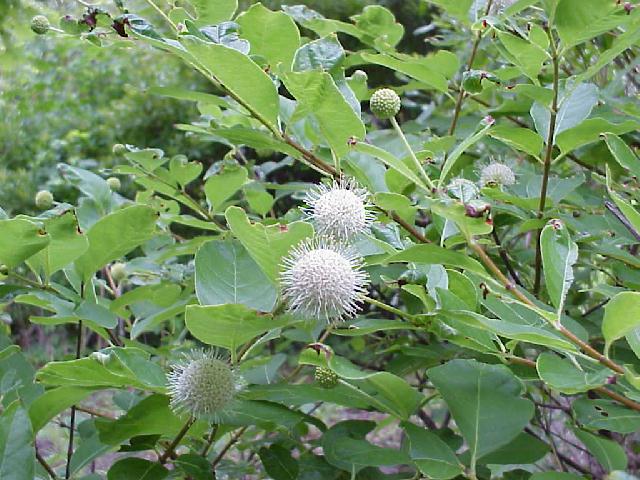
June Blooms in my Georgia Garden: Button Bush

Weird-looking but spectacular are the blooms on Cephalanthus occidentalis, usually referred to as the Buttonbush. The blooms are perfectly round balls or spheres!


Buttonbush is native to the Eastern United States and as far west as Texas. Although you might have never seen one, when found growing naturally, it is usually on the bank of a pond or stream. Close friends of mine have a pond in West Point, Georgia, that is almost completely surrounded with large Buttonbush plants. Such a beautiful sight it is, when in bloom with all the pollinators buzzing around it.

This native shrub absolutely loves water and likes having wet feet all the time, but it can be grown in ordinary garden soil too. Buttonbush is very easy to grow and tolerates almost any soil. Heavy clay is not a problem at all.

The flowers are fragrant, and like many blooms favored by pollinators, smell like honey.

Leaves are dark green and shiny. I have not noticed any pest or disease problems with the buttonbush. This shrub leafs out late, sometimes not until May here in Georgia. The leafs turn a soft yellow in fall before dropping.

Cephalanthus occidentalis will reach heights up to 7 feet or more, and will do so quickly in wet soil.

Plant Buttonbush in full sun or partial shade on a pond or stream bank if you are lucky enough to have one on your property. If not, plant it where you can reach it with a hose on a regular basis. Mine are planted by the greenhouse where I can water it whenever I think it needs it.

Buttonbush will grow in any soil. Regular garden soil is fine. Whatever you have--Heavy to average soil. Clay soil is fine. But amend it with some composted manure or compost to add fertility. 

Cephalanthus occidentalis loves water. Keep soil moist to wet. This shrub even tolerates standing water. Don’t allow to dry out. 

Bumblebees love Blooms on the Buttonbush
The Buttonbush can be grown almost anywhere in the United States, since it is hardy in USDA Zones 4 – 10.

If you want a whole row of them or plan to plant in mass, space them about 5 feet apart.

Buttonbush benefits from being cut back severely every few years to rejuvenate the plant.


Plant a buttonbush in your garden and the bumblebees and butterflies will certainly thank you! I have seen 2 or 3 bumblebees on one flower all at the same time.

June Blooms in my Georgia Garden: American Elderberry

Large flat white flower clusters adorn each stem of the American Elderberry Bush at the edge of our garden today. Sambucus canadensis, known as the American Elderberry is a shrubby plant native to the Southeastern United States. This time of year you can spot the large bloom clusters on plants in ditches and moist spots along the roadside all over Alabama and Georgia. Perhaps you've noticed these large flowers on your commute to work or school and wondered what they are. 

The flower clusters provide nectar for all types of pollinators. When you examine the flowers up close, you find that they emit a nice honey scent into the air. Can pollinators smell that? If they cannot, I wonder how they find flowers that have the sweet nectar they want. 

The flower clusters are followed by small purple-black berries in late summer. The berries are adored by birds and make great wine. They do not taste good to me, but once my little boy ate so many that he vomited. The berries should be cooked before ingested. Little boys will eat anything and must be watched constantly, especially in the garden. I am fortunate that vomiting is the only thing he suffered that day. He is now 14 and since then has eaten very many things that horrify me, but that's a story for another day.


Elderberry loves water but is easy to grow in any garden. Sambucus spreads by suckers and reaches a height of 8-10 feet by the end of summer even if cut to the ground in early spring. Plant it at the back of the border or along the edge of your property, so the size will not be a problem. Looks particularly beautiful on the bank of a pond or stream, if you have one.

Sambucus canadensis can be grown just about anywhere in the United States, since it is hardy in USDA Zones 3-9.

Elderberry is not picky about its site, as it will grow great in either part shade or full soil, as long as soil is rich and water is plentiful. Well that's what it prefers, but I've found it will grow in regular soil where water is not plentiful, but just won't get as large, and will be quite leggy.

Whether you use the flowers and berries yourself or not, consider planting Elderberry in your garden. It is a great plant for wildlife.

May Blooms in my Georgia Garden: Caldwell Pink Rose

One of the showiest roses in my garden today is the Caldwell Pink Climbing Rose. Considered to be one of the "found" roses, Caldwell Pink is a polyantha that might be the same rose as Pink Pet from China. Caldwell Pink Climbing Rose blooms here in May each year, and when it does, it'll knock your socks off. The plant is absolutely covered with large clusters of small 2-inch fluffy pink blossoms. It is a rampant grower that will quickly cover a fence or arbor, rooting wherever it touches the ground. Although the blooms have very little fragrance if any, this is one of my favorites. Unfortunately, we won't see the blooms again until next year, since Caldwell Pink Climbing Rose is not a repeat bloomer.

Not so with the Caldwell Pink Shrub Rose. The shrub form of Caldwell Pink blooms continuously until the first Fall frost. Unlike the climber, Caldwell Pink Shrub Rose is a compact bush about 4 feet tall, so it is perfect for the small garden or in a foundation planting.

Whether you choose the climber or the shrub, Caldwell Pink Rose is very easy to grow. It tolerates the heat and drought common in our Georgia garden during the summer, Caldwell Pink can be grown in colder climates too, hardy in USDA Zones 6 through 10. The foliage remains clean and vibrant green throughout the season, never requiring spray chemicals of any kind. 

May Blooms in my Georgia Garden: Itea virginica Virginia Sweetspire

Itea virginica, commonly referred to as Virginia Sweetspire, is covered with its white racemes today. The honey-scented blooms are not only beautiful but attract numerous pollinators into the garden. Virginia Sweetspire is an easy to grow shrub, as long as you can provide water during dry spells. Itea loves moisture and tolerates wet, boggy, or even soggy soil. But I also know it to be quite drought tolerant, since I have one that has survived years with no supplemental water. That one has grown very slowly and only blooms when we have a rainy spring like we had this year. The Virginia Sweetspire I planted more recently that gets plenty of regular water has outgrown the other at a rapid speed and shows off every year for me whether it rains or not, but it gets regular water. 

Itea likes rich soil and would love it if planted on a creek bank or the edge of a pond.  I have neither, but it does just fine at the edge of my greenhouse garden where I can water it often.

Itea is a plant that is beautiful in all seasons. During Summer after the blooms have faded, the leaves remain a rich green, no matter how hot it gets. In Fall, its leaves turn brilliant shades of burgundy to scarlet red, making it a great alternative to the invasive Burning Bush. In our climate, Itea is semi-evergreen since leaves will remain on the shrub during our sometimes mild winters. So even when not in bloom, Itea virginica is an asset in the garden.

Itea virginica is a native shrub found growing in the Southeastern United States, but can be grown just about anywhere, since it's hardy in USDA Zones 5-9. 

'Henry's Garnet' shows off larger flowers than the species and has excellent fall color. It is a larger growing cultivar reaching up to 6 feet in height.

'Merlot' is famous for its maroon fall foliage and, at only about 4 feet tall, is more compact than 'Henry's Garnet.'

Plant Virginia Sweetspire in your garden, and you'll enjoy it in all seasons of the year.


May Blooms in my Georgia Garden: Pomegranate

Pomegranate Blooms
One of the showiest plants in my garden today is the Pomegranate Tree. As you can see, the large, fluffy many-petaled flowers resemble carnations. This cultivar is the very popular 'Wonderful.'

Exotic as it may seem, Pomegranates are very easy to grow in your own garden here in Georgia and Alabama. Pomegranates enjoy a hot dry summer even when planted in poor soil. In fact, Pomegranate just might be the easiest fruit tree to grow! 

Punica granatum, or as we know it, Pomegranate, loves hot sunny summers and dry, well-drained soil. It’s perfect for Georgia gardens, as long as we amend the soil for drainage. Pomegranate trees, or actually the growth habit is more like that of a shrub, require a cold winter to set fruit. That’s us—hot summers and a cold winter—at least cold enough for Pomegranates, because winter temperatures down into the 40’s is cold enough.

Pomegranate is a rapid growing plant that will ultimately be 10-20 feet tall. This large shrub can be somewhat prickly, so situate it where that won't be a problem. The large fruits are heavy, weighing down the branches.  It's best to prune the plant to keep it 10 feet or under, making it easier to pick the fruit and also to keep the branches from breaking with the weight of the fruit. 

The large fluffy bright orange blossoms appear in early summer. The fruit develops in late summer and matures into fall.  The foliage is attractive as well--new growth is red-tinged, and the leaves turn a golden yellow in fall.

With all the news lately regarding the health benefits of Pomegranate juice, we should all consider growing our own pomegranates!

May Blooms in my Georgia Garden: Roses Everywhere!

Well, gardening tasks last month got me pretty far behind on my blog posts, and I missed a week in April. It's now almost the middle of May and the garden is in full bloom. Roses are blooming all over the place, so I'll show you the pictures I took this week, beginning with the most common, the very popular Knockout Rose.


We now see Red Knockout Rose every where we turn. There's a reason for its popularity. As its name implies, the Knockout Rose truly knocks you out with it's bright red blooms that completely cover the large shrub. It is so easy to grow that it is used in just about every landscaping project whether commercial or private home. You just can't beat the Knockout Rose--it will bloom almost year round in our climate.  Although the grower's tag that comes with the plant states these roses will get about 3 feet tall and wide, they grow to at least 6 feet tall every summer. I'm sure one of my Red Knockout Rose Bushes is at least 10 feet tall. I didn't prune it at all this year. I'm trying to see if it will grow as tall as the house.


This Pink Knockout Rose called 'Blushing Knockout' is a lovely soft shade that complements everything else. It doesn't seem as vigorous as the original Red Knockout, in that it does not need as much pruning to keep it the size I want. I wouldn't prune this one either, but it's planted below my office window, and I want to be able to see out. Even though this shrub is not as large as the Red Knockout, it's still well over 6 feet tall and just as wide.


We have another Pink Knockout Rose but the blooms are a deeper shade of pink, and they are double. It's eyecatching, isn't it? This one might be my favorite Knockout Rose. I just love a vivid shade of pink. My goal is to have it hide an ugly fence, and I think it'll do just that by the end of this summer, if not before. Pollinators are crazy about this rose. I think I'm not the only one who loves it.


My Yellow Knockout Rose is called 'Sunny Knockout.' Visitors tell me all the time that it's the prettiest yellow one they've seen. The photo does not do it justice, because of my lack of photography skills. I should have taken that class at the library last year. So far, Sunny Knockout has required no pruning to keep it within bounds, not that I'd want to. This one is about 4 feet tall right now, and I've had it a couple of years. I don't want to keep this shrub a certain size anyway, since it has the same job as the double pink one--to hide that ugly fence.


Carefree Beauty is one of my favorite roses. The voluptuous pink blooms are huge! This is a rose that just keeps on giving, because it blooms over and over and over again until the first frost. Blooms are as large as my hand. There is a light fragrance, especially when the bush is covered with her large flowers. Carefree blooms begin opening in April and continue to the first frost when the shrub is always still covered with buds. Large orange rosehips develop and are quite showy into the winter. This rose tolerates our very poor clay soil just fine. It is a lovely specimen rose as shown in my photo, but Carefree Beauty would make a great hedge too. I'm picturing a hedge of different shrub roses with mixed but either coordinating or contrasting colors. 


Mutabilis Rose is an old-fashioned China Rose. Single blooms begin as yellow, change to a peachy apricot, then to a deep pink, and finally reddish pink. These bright flowers in different colors all on the same bush at the same time are quite eye-catching and the reason for the common name of Butterfly Rose. This is another rose that will get much larger than the grower's tag will lead you to believe, because ours is at least 10 feet tall and even wider than that. Although blooms are not fragrant, this shrub rose is definitely spectacular in the garden. Another asset is that this rose has very few thorns, so you can clip it or prune it without gloves. I hate to wear gloves, so this is definitely a bonus for me.


My most recent acquisition is a German Rose known as the Blue Rose. Veilchenblau is a rambling rose that is almost thornless, and as you can see, it really is a shade of blue. The small blue/purple blooms with purple stamens cover the whole plant. Even though this rose blooms just once a year, I am excited to add it to my garden.  The fragrance is very nice too. Veilchenblau is classified as a multiflora rambler. This growth habit offers several growing options. It can be grown as a free-standing shrub by pruning it hard right after it blooms. It is lovely grown on a fence as shown in the photo. Or it can be tied to a pillar or column like a climber. It would be beautiful on a trellis or arbor. 

April Blooms in my Georgia Garden: Week 3

Michelia figo


Banana Shrub, Michelia figo, is a large-growing evergreen shrub in the Magnolia Family. Banana Shrub enjoys shade and regular water. Blooms are highly fragrant and really do smell like bananas. The petals are the color of a banana peel but with a burgundy center. A large bush will fragrance the whole garden and cause your friends to go on a search for the source of the scent.


Calycanthus floridus


A native shrub blooming in my garden this week is Calycanthus floridus, most often referred to as Sweet Shrub, but also known as Sweet Betsy, Bubby Bush, and Pineapple Shrub. Blooms are very fragrant, but the fragrance can vary from one bush to another. Some don't have much of a scent while others will. There's a reddish brown blooming species and a yellow blooming cultivar. The yellow blooming 'Athens' is said to be much more fragrant that the species.


Bignonia capreolata


Crossvine is a vigorous native vine often confused with Trumpet Creeper/Trumpet Vine/Cow Itch, but it's a different plant altogether. Bignonia capreolata is an evergreen vine with orange to red blooms like the flames of a fire. Hummingbirds love it even more than I do. Blooms are fragrant, but we seem to disagree with eachother on what the flowers smell like. Some say they smell like curry, but others insist it's mocha. Crossvine needs a strong support but is not invasive. Native to the Southeastern United States.


Aesculus pavia


Red Buckeye, Aesculus pavia, is my most favorite native tree. This small native tree grows with a shrubby habit and is native to the Eastern United States. It naturally occurs in shady woods but when grown in full sun, the flowers are huge red and yellow spikes that are showy from a great distance. Red Buckeye is one of the first plants to bloom when the hummingbirds return in the Spring. This buckeye is drought tolerant and very easy to grow.

Hydrangea arborescens: Wildlife Value of the Smooth Hydrangea

If you have seen the lovely Annabelle Hydrangea, you love her. Hardy, easy to grow, and beautiful in summer, Hydrangea arborescens 'Annabelle' is probably the most versatile hydrangea you can grow in the garden.

Large voluptuous white blooms appear in early summer, despite the severity of your winter or any pruning that might have been done too late, because this hydrangea blooms on new growth. Additionally, Our native hydrangea arborescens, will bloom again in late summer if spent blooms are removed.

Hydrangea arborescens, also known as smooth hydrangea, is native to the Eastern United States. Annabelle is a selection known for its particularly large white blooms that can be up to 10 inches across.

Hydrangea Sphinx Moth
 photo from www.bugguide.net


You might already know the beautiful attributes of Hydrangea arborescens, but did you know Annabelle Hydrangea also has wildlife value? Here at Shady Gardens, we try to do all we can to encourage a diverse population of wildlife. Our garden is a sanctuary for birds, butterflies, insects, and mammals of all kinds. Hydrangea arborescens is a favorite host plant for Darapsa versicolor, which is also known as the Hydrangea Sphinx Moth. This Sphinx Moth pollinates the flowers on Hydrangea arborescens, then lays eggs on the leaves. 


Darapsa versicolor larva photo from www.bugguide.net


The Eggs develop into larvae which then feed on the leaves of the shrub. If you find a green caterpillar like the one shown here on the leaves of your Annabelle Hydrangea, you can count yourself blessed, because Darapsa versicolor is rarely seen.

Pink Annabelle Hydrangea at Shady Gardens Nursery


A pink-blooming form of Annabelle has been developed, so look for it at your local garden center or online.


(Hydrangea Sphinx Moth Photo credits: http://bugguide.net/node/view/411927, Nolie Schneider 2010 and Floyd Williams 2005.).


June Blooms in my Georgia Garden: Oakleaf Hydrangea

This time of year our garden is always bursting with blooms, but this year has been a little different. Due to a very mild winter, everythin...