Showing posts with label beetles. Show all posts

Lightning Bugs, Fireflies: Beneficial Insects for the Garden

We call them lightning bugs, but in some parts of the country they’re known as fireflies. Whatever you call them, we all enjoy seeing them flitting around and lighting up on summer nights. 
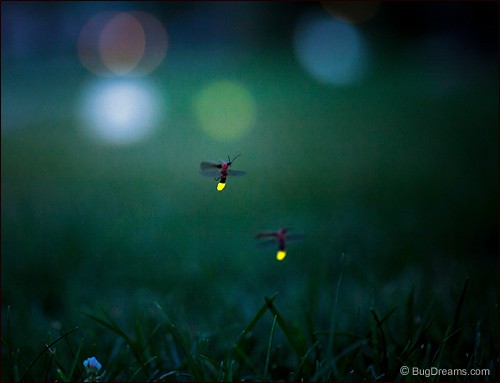
Photinus pyralis image from focusingonwildlife.com
Many of us enjoyed catching them and placing them in a lidded jar on our nightstand when we went to bed at night, but did you know that lightning bugs are beneficial insects? 

Lightning bugs are actually beetles that have a soft outer shell instead of a hard one. Lightning bugs lay their eggs in soft mud. Maybe that’s why we have so many this year—if you’ve been out to our place, you’ve seen our mud! 

It’s the larvae that are so helpful to gardeners—eating pests like snails, slugs, cutworms, and other larval pests. The larvae are luminous as well, lighting up all the time, but turning off their light when disturbed. For this reason they’re called Glow-worms. 

Researchers are also studying lightning bugs because they contain two rare chemicals that are used to fight cancer, multiple sclerosis, cystic fibrosis, and heart disease. So next time you’re sitting outside enjoying a warm summer evening, think about the wonderful little lightning bugs and all the other benefits God is providing for us in nature!

Beneficial Insects in the Garden

When many people see an insect, the first impulse is to kill it. But not all insects are pests, and many are actually beneficial insects, meaning they do good things like eating harmful insects and pollinating flowers. When we use pesticides to control insect pests, we also kill the good bugs. You probably already know that Ladybugs or Lady Beetles are beneficial insects, feeding on aphids, scales, and mealybugs. But did you know that the larvae of ladybugs look like tiny little alligators and eat even more pests than their parents?


Lacewings are fragile-looking insects with delicate, lacy green or brown wings, large eyes, and very long antennae. Their larvae feed on aphids, scales, mealybugs, whiteflies, and young caterpillars.


The Praying Mantis shows no favoritism and will eat almost any insect (yes, they will eat the good bugs too and will even eat each other!) 


Parasitic Wasps are usually too small for you to see, but you might spot signs of their presence. If you find a crispy-looking brown, inflated aphid attached to a leaf, it was probably the victim of a parasitic wasp that laid its eggs in the aphid so its offspring would have something to eat when they hatched. You might also see caterpillars, cabbage loopers, or hornworms carrying around cocoons of developing wasps. Parasitic Wasps lay their eggs on the back of soft caterpillars so their young will have a convenient food source upon hatching. (Yuck!) 

It's almost time to see the Tomato Hornworm eating up the leaves and even the green tomatoes on our tomato plants. The best control is to pick them off and destroy them, but if you see one with loads of small white things that look like clusters of rice, just leave it alone--the white things are eggs of the Parasitic Wasp! 
Tomato Hornworm with Eggs of the Parasitic Wasp


Grandaddy Spiders, or you might call them Daddy Longlegs, eat aphids, mites, and other garden pests. (No photo this time, because spider photos give me the creeps.)

These are just a few of the many beneficial insects in our gardens. Beneficial insects can be purchased from mail-order sources, but you can attract them into your garden without purchasing them. The best way to attract these beneficial insects into your garden is to just plant more flowers and herbs!

June Blooms in my Georgia Garden: Oakleaf Hydrangea

This time of year our garden is always bursting with blooms, but this year has been a little different. Due to a very mild winter, everythin...