Showing posts with label soil. Show all posts
I don’t know about you, but during the winter, I just cannot get warm without a fire! Every time I build a new fire something must be done with the ashes from the previous one.  We try to recycle as much as we can, and I just abhor waste. What can we do with those wood ashes?

A great way to use them is to apply them to the garden. Before we do that, we must decide which garden area would benefit from wood ashes. Ashes from hardwood trees make great soil amendment for certain types of plants. They contain nutrients like phosphorus, potassium, and other elements that will promote bloom and strengthen roots on plants such as lilacs, rosemary, and peonies, as well as certain vegetables like broccoli, cabbage, and collards. Don’t use ashes from charcoal fires or from treated lumber, because they contain chemicals that would be harmful to plants.

The addition of wood ashes can be of great help to you when growing plants that prefer alkaline soil, especially if you have acid soil like we do in Georgia. The wood ashes will sweeten the soil, making it less acidic. You must be careful where you deposit the wood ashes, because plants like blueberries, camellias, azaleas, and rhododendrons all need acid soil, and will perish if you apply wood ashes around them.

To find out what kind of soil you have, you can take a soil sample to your local County Extension Service for evaluation. For a small fee, they will send it off for testing. For more information, just call your local county extension office.

Also, as with most fertilizers, a little wood ash goes a long way.  Apply no more than 20 pounds per 1000 square feet per year. Plus, wood ashes should never be applied too close to tender roots of newly planted seedlings, so it’s best to apply them to the soil well in advance of planting time. (Fall would be great!) Wood ashes are also beneficial to lawns if applied very sparingly and watered in well.

In addition to soil benefits, wood ashes make a good natural slug repellent---just encircle the vulnerable plant with a ring of ashes and the snail/slug will not cross the line!  Since ashes won’t be as plentiful next summer when snails are munching, you might want to save some for later in a galvanized bucket.

August Blooms in my Georgia Garden: Chelone, Turtlehead

Georgia heat has been brutal this summer, but since I have a sprinkler with a timer, the Chelone is blooming on schedule. 

Chelone is an American native plant found in the Northeastern United States, but it grows nicely here in the Southeast if it gets enough water. Chelone is also known as Turtlehead. The flower spikes are made up of individual flowers that do resemble a turtle's head. According to Greek mythology, Chelone was a nymph who refused to attend the marriage of Zeus to Hera. As punishment, the gods turned her into a turtle!

Sometime in late August or September, depending on your climate, spikes of flowers ascend in either pink or white.

Chelone loves consistently moist or wet soil beside a pond or a stream. It is perfect for a bog garden. I have mine planted in a large tub that is my makeshift bog garden. Turtlehead can be grown in regular garden soil if you have irrigation. Chelone will bloom well in either partial shade or full sun, but if you put it in full sun, be ready to water it regularly. Amend your soil with a rich humusy compost and mulch with shredded leaves. A lot of shade promotes legginess, so if growing in shade, pinch the stems back in early summer to encourage stronger stems and more flowers. 

If you live in Maryland, Chelone is a necessary perennial for the butterfly garden, since it is an important food source for the Baltimore Checkerspot Butterfly, Maryland's State Insect.

This plant can be grown in most of the United States, since it is hardy in USDA Zones 5-8.

When in bloom, Chelone makes quite a show at a height and spread of up to 4 feet. Plant a low groundcover beside it that will remain green in the winter, because Chelone disappears completely with the first frost.

Deer Resistant? Yes! Deer will not eat Chelone. 

Chelone blooms make great cut flowers too, so plant it in your cutting garden.  Like most plants I write about, Chelone is available from my favorite native plant source, Shady Gardens Nursery.

June Blooms in my Georgia Garden: Button Bush

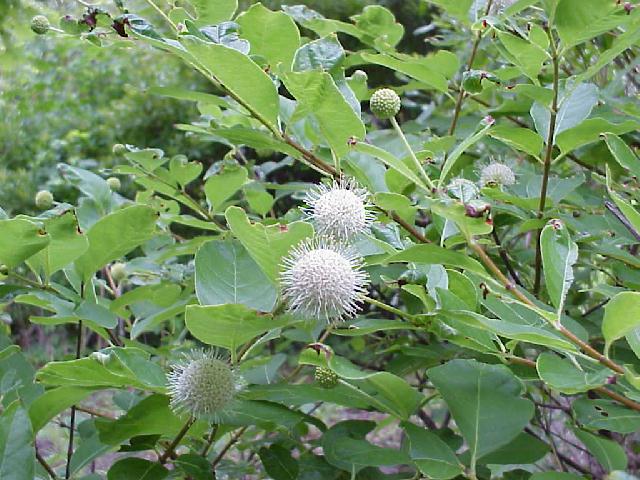
Weird-looking but spectacular are the blooms on Cephalanthus occidentalis, usually referred to as the Buttonbush. The blooms are perfectly round balls or spheres!


Buttonbush is native to the Eastern United States and as far west as Texas. Although you might have never seen one, when found growing naturally, it is usually on the bank of a pond or stream. Close friends of mine have a pond in West Point, Georgia, that is almost completely surrounded with large Buttonbush plants. Such a beautiful sight it is, when in bloom with all the pollinators buzzing around it.

This native shrub absolutely loves water and likes having wet feet all the time, but it can be grown in ordinary garden soil too. Buttonbush is very easy to grow and tolerates almost any soil. Heavy clay is not a problem at all.

The flowers are fragrant, and like many blooms favored by pollinators, smell like honey.

Leaves are dark green and shiny. I have not noticed any pest or disease problems with the buttonbush. This shrub leafs out late, sometimes not until May here in Georgia. The leafs turn a soft yellow in fall before dropping.

Cephalanthus occidentalis will reach heights up to 7 feet or more, and will do so quickly in wet soil.

Plant Buttonbush in full sun or partial shade on a pond or stream bank if you are lucky enough to have one on your property. If not, plant it where you can reach it with a hose on a regular basis. Mine are planted by the greenhouse where I can water it whenever I think it needs it.

Buttonbush will grow in any soil. Regular garden soil is fine. Whatever you have--Heavy to average soil. Clay soil is fine. But amend it with some composted manure or compost to add fertility. 

Cephalanthus occidentalis loves water. Keep soil moist to wet. This shrub even tolerates standing water. Don’t allow to dry out. 

Bumblebees love Blooms on the Buttonbush
The Buttonbush can be grown almost anywhere in the United States, since it is hardy in USDA Zones 4 – 10.

If you want a whole row of them or plan to plant in mass, space them about 5 feet apart.

Buttonbush benefits from being cut back severely every few years to rejuvenate the plant.


Plant a buttonbush in your garden and the bumblebees and butterflies will certainly thank you! I have seen 2 or 3 bumblebees on one flower all at the same time.

May Blooms in my Georgia Garden: Itea virginica Virginia Sweetspire

Itea virginica, commonly referred to as Virginia Sweetspire, is covered with its white racemes today. The honey-scented blooms are not only beautiful but attract numerous pollinators into the garden. Virginia Sweetspire is an easy to grow shrub, as long as you can provide water during dry spells. Itea loves moisture and tolerates wet, boggy, or even soggy soil. But I also know it to be quite drought tolerant, since I have one that has survived years with no supplemental water. That one has grown very slowly and only blooms when we have a rainy spring like we had this year. The Virginia Sweetspire I planted more recently that gets plenty of regular water has outgrown the other at a rapid speed and shows off every year for me whether it rains or not, but it gets regular water. 

Itea likes rich soil and would love it if planted on a creek bank or the edge of a pond.  I have neither, but it does just fine at the edge of my greenhouse garden where I can water it often.

Itea is a plant that is beautiful in all seasons. During Summer after the blooms have faded, the leaves remain a rich green, no matter how hot it gets. In Fall, its leaves turn brilliant shades of burgundy to scarlet red, making it a great alternative to the invasive Burning Bush. In our climate, Itea is semi-evergreen since leaves will remain on the shrub during our sometimes mild winters. So even when not in bloom, Itea virginica is an asset in the garden.

Itea virginica is a native shrub found growing in the Southeastern United States, but can be grown just about anywhere, since it's hardy in USDA Zones 5-9. 

'Henry's Garnet' shows off larger flowers than the species and has excellent fall color. It is a larger growing cultivar reaching up to 6 feet in height.

'Merlot' is famous for its maroon fall foliage and, at only about 4 feet tall, is more compact than 'Henry's Garnet.'

Plant Virginia Sweetspire in your garden, and you'll enjoy it in all seasons of the year.


Fragrant Swamp Azalea: Rhododendron viscosum


If you like fragrant plants, you'll want Rhododendron Viscosum in your garden! Most often referred to as Swamp Azalea, Rhododendron Viscosum is a native azalea found in the Eastern United States. Pure white blooms in early summer have a pleasing spicy scent reminiscent of cloves. 
Rhododendron viscosum in June

Swamp Azalea, as the name implies, is one of the few azaleas that can tolerate periodically wet soil. This plant can grow in regular garden soil, but it does not want to miss out on water. If you can water regularly when rainfall is absent, Swamp Azalea will be easy for you to grow in your garden. Grows into a very tall shrub when planted near a pond or stream. Swamp Azalea is the perfect native rhododendron for a rain garden.

Rhododendron Viscosum can be grown almost anywhere in the United States since it grows well in USDA Hardiness Zones 4-9. 

Swamp Azalea can be grown in full sun if regular water is available. Otherwise, filtered sun/shade is best.

Recycling at Home: Reuse your Fireplace Ashes


I don’t know about you, but during the winter, I just cannot get warm without a fire! Every time I build a new fire however, something must be done with the ashes from the previous one. We try to recycle as much as we can, and I hate to waste anything, but what can we do with those wood ashes?


A great way to use them is to apply them to the garden. Before we do that, we must decide which garden area would benefit from wood ashes. Ashes from hardwood trees make great soil amendment for certain types of plants. They contain nutrients like phosphorus, potassium, and other elements that will promote bloom and strengthen roots on plants such as lilacs, rosemary, and peonies, as well as certain vegetables like broccoli, cabbage, and collards. Don’t use ashes from charcoal fires or from treated lumber, because they contain chemicals that would be harmful to plants.


The addition of wood ashes can be of great help to you when growing plants that prefer ‘sweet’ soil, especially if your soil is very acidic. The wood ashes will sweeten the soil, making it less acidic. You must be careful where you deposit the wood ashes, because plants like blueberries, camellias, azaleas, and rhododendrons all need acid soil, and will perish if you apply wood ashes around them.


To find out what kind of soil you have, for a small fee you can take a soil sample to your local County Extension Service for evaluation. They’ll have to send it off for testing, and for more information, follow this link: Soil Testing or just call your local county extension office.

Also, as with most fertilizers, a little wood ash goes a long way. Apply no more than 20 pounds per 1000 square feet per year. Plus, wood ashes should never be applied too close to tender roots of newly planted seedlings, so it’s best to apply them to the soil well in advance of planting time. (Fall would be great!) Wood ashes are also beneficial to lawns if applied very sparingly and watered in well.

In addition to soil benefits, wood ashes make a good natural slug repellent---just encircle the vulnerable plant with a ring of ashes and the snail/slug will not cross the line.  Since ashes won’t be as plentiful next summer when snails are munching, you might want to save some for later in a galvanized bucket.

Georgia Drought is an Annual Event--What Can You Do About It?

Delosperma nubigenum
As our climate here in Georgia becomes more hot and dry, it is important to make wise choices when considering plants for the garden. Inadequate rainfall again this summer caused many of our newly planted garden additions to die. 

If you don't want to be faced with those same results again every single year, consider plants that actually enjoy hot, dry growing conditions. My husband jokingly states that we live in the 'Desert Southeast.' Well, there really seems to be a lot of truth to that new nickname, so we've added several plants to our garden that originate in the desert southwestern US. Plants from that region are accustomed to hot, dry climates with poor soil, and most will adapt well to our climate here. 

Southwestern native plants need well-drained soil, though, and for the most part, Georgia soil is heavy clay. Some soil improvements will be necessary to help those plants survive here. 

Now, bear with me for a moment--I know you're thinking I'm about to suggest you install a cactus garden, but I'm not. Most of the time when we think of the gardens of Arizona, we think only of cactus and yucca, but there's more out there than that. I've compiled a list of garden worthy plants that deserve consideration for Georgia gardens, along with photos to show you how beautiful they are. By the way, some of these recommendations are actually native to the Southeast!
    Delosperma cooperi
  • Delosperma comes in several varieties with different foliage and bloom color, but my favorite Ice Plants are cooperi and nubigenum. Delosperma cooperi has rather large purple flowers resembling asters on a ground-hugging succulent plant. Delosperma nubigenum (shown in the top photo) has sunny yellow flowers resembling daisies on a very low-growing succulent with jelly-bean shaped leaves that turn red with the onset of cold weather.
  • Gaillardia: Blanket Flower
  • Gaillardia, often referred to as Blanket Flower or Indian Blanket, has blooms all summer long that, as the nickname implies, have all the colors of an Indian Blanket. The blooms are quite large and bright, visible from a distance, making this plant ideal for roadside gardens. Some even have ruffly or double petals!
  • Rudbeckia (Black eyed Susan) and Echinacea (Coneflower) are probably already in your garden, but seek out some of the new colors which are hard to find but unusually beautiful.
  • Pink Muhly Grass
  • Ornamental grasses will provide movement in the garden as well as foliage contrast. The blooms which are usually in the form of a plume or seed head offer additional beauty at the end of the season and also food for some of our native birds! An unusual native grass we grow in our garden, Muhlenbergia capillaris or Pink Muhly Grass, goes unnoticed all year until September when billows of pink cotton candy appear above the foliage--simply spectacular!
  • Bulbs tend to be more drought tolerant, so if a native plant forms a bulb, you can usually count on it surviving a drought and returning when more favorable conditions return. One of my favorites is a California native plant, Dichelostemma, commonly referred to as Firecracker plant. This plant is available in either red or pink blooms and likes dry summers! Other drought-tolerant native bulbs are Solomon's Seal and Rain Lilies. Zephyranthes candida sends up lovely white blooms usually right after a good rain shower, which is the reason for its common name.
  • Amsonia is a native perennial that really looks like a grass to me. In early summer blue flowers are lovely, but in my opinion this plant is most beautiful in fall when the foliage turns the brightest of gold.
  • Baptisia also has many seasons of beauty--soft blue-tinted foliage appears in spring, vivid blue flowers are next, then large seed capsules that turn black in late summer. Wow!
  • Crossvine: Bignonia capreolata
  • Vines are needed in every garden for that vertical interest, and my absolute favorite of all is the very drought tolerant Cross Vine, Bignonia capreolata. Not to be confused with the also beautiful Trumpet Vine which can be invasive if not controlled, the Cross Vine is much easier to manage. And instead of just plain orange blooms, Bignonia has blooms that resemble a flame--yellow, orange, and pinkish red all on the same flower! Shaped like a trumpet, the blooms are a favorite of the hummingbirds here.
  • I wouldn't be discussing native plants if I didn't mention my very favorite native tree, the Red Buckeye. Unlike other buckeyes, the Red Buckeye, Aesculus pavia, grows well in dry soil. The huge red bloom panicles appear in very early spring even before the leaves, and provide food for the hummingbirds just as they are returning from their winter vacation.
    Red Buckeye: Aesculus pavia
    These plants tolerate our winters as well as our hot, humid summers, as long as the soil is well-drained. So as you plan for new additions to your garden this year, remember there will always be a summer drought and plant some of our beautiful native American plants that are even more accustomed to the heat than we are!


Green Gardening

Going green in the garden is becoming more and more important to us as we learn additional dangers of pesticide use. To grow a good garden, we must preserve the life in the soil. Healthy soil is full of microorganisms which help to grow more vigorous plants. Too much fertilizer can kill microorganisms. To grow healthy plants, whether your passion is food crops or beautiful ornamentals, you must build up the soil.
  • Add compost--composted manure contains much more beneficial microorganisms than just regular compost.
  • Mulch with organic or plant based mulches (shredded bark or leaves).
  • Believe it or not, applications of horticultural molasses will feed the microorganisms.
  • Cornmeal added to the soil feeds a certain fungus that helps fight plant diseases. Isn't that fascinating? Now I know what to do with that cornmeal I forgot about in the back of the cabinet.
  • While we are feeding our soil microorganisms, we must also remember to protect them.
  • Synthetic fertilizers harm the soil organisms and should be avoided.
  • Over tilling the soil breaks down the soil ecosystem, so add mulch instead. I know I mentioned mulch already, but application of good organic mulch is important enough to mention twice. Mulch attracts the soil critters like earthworms who will till the soil for you.

Drought Survival Tips

If you're in the Southeast as we are, I know you're thankful for the rain we've been receiving. I'm now encouraged and excited about the upcoming gardening season, and we're again making plans about what to plant. The whole state of Georgia, as well as much of our country, sufferered tremendously from the drought last year. We'd be wise to plan ahead to be hit hard with it again this year. Currently I'm studying on what plants in our garden made it through the drought last year, and searching for new varieties of those to add this year. I'll let you know in future posts what I find out!

As we dealt with the drought during the past few years, we've come upon a few tips for survival, and I thought I'd share them with you:


  • Conserve water every way you can. Save water for later use by leaving a bucket in the shower or fill buckets from leftover bath water to use for watering plants. Install a rain collection barrel to collect rain now while it's plentiful.

  • Amend the soil with compost. Well-amended soil retains water better, and plant roots are better able to move freely through the soil to reach available water and nutrients, making for healthier plants ready to fight the drought.

  • Plant drought tolerant plants! If you must have some of the plants that are less able to cope with water shortages, plant them close together in a spot where you can easily water them with reclaimed water.

  • Mulch, mulch, mulch! Apply a thick layer--up to 4 inches thick--of a good organic mulch. Don't use things like gravel unless you're growing cactus. And it turns out that mulch made from recycled tires could be cancer-causing, according to a report from Environment and Human Health Inc http://www.ehhi.org/reports/turf/). Good organic mulch not only retains soil moisture and protects roots, but also breaks down in time, enriching the soil.

Remember to check back soon for my suggestions on drought tolerant plants for your Georgia garden.

Wood Ashes Lower Garden Soil Acidity

Lilacs enjoy alkaline soil
I don’t know about you, but during the winter, I just cannot get warm without a fire! Every time I build a new fire however, something must be done with the ashes from the previous one. Well, we try to recycle as much as we can, and I just abhor waste. What can we do with those wood ashes?


A great way to use them is to apply them to the garden. Before we do that, we must decide which garden area would benefit from wood ashes. Ashes from hardwood trees make great soil amendment for certain types of plants. They contain nutrients like phosphorus, potassium, and other elements that will promote bloom and strengthen roots on plants such as lilacs, rosemary, and peonies, as well as certain vegetables like broccoli, cabbage, and collards. Don’t use ashes from charcoal fires or from treated lumber, because they contain chemicals that would be harmful to plants.


The addition of wood ashes can be of great help to you when growing plants that prefer ‘sweet’ or alkaline soil, especially if your soil is very acidic. The wood ashes will sweeten the soil, making it less acidic. You must be careful where you deposit the wood ashes, because plants like blueberries, camellias, azaleas, and rhododendrons all need acid soil, and will perish if you apply wood ashes around them.


To find out what kind of soil you have, you can take a soil sample to your local County Extension Service for evaluation. They’ll have to send it off for testing, and for more information, go to: http://pubs.caes.uga.edu/caespubs/pubcd/C896.htm or just call your local county extension office.


Also, as with most fertilizers, a little of the wood ashes goes a long way. Apply no more than 20 pounds per 1000 square feet per year.

Plus, wood ashes should never be applied too close to tender roots of newly planted seedlings, so it’s best to apply them to the soil well in advance of planting time. Wood ashes are also beneficial to lawns if applied very sparingly and watered in well.


In addition to soil benefits, wood ashes are a natural slug repellant---just encircle the vulnerable plant with a ring of ashes and the snail/slug will not cross the line! Since ashes won’t be as plentiful this summer when snails are munching, you might want to save some for later in a galvanized bucket.
January Ideas for Georgia Gardens

Even in mid-winter, there are many things you can do in the garden to enjoy those sporadic warm days we often have during January and February here in Georgia. Any time is a great time to improve your soil, but now would be ideal since you probably aren’t doing much planting. Soil amendments can be anything from homemade compost, composted manure, mushroom compost, or purchased soil conditioner. Do you ever wish you had some of those old-fashioned plants like your grandmother used to grow? Well, now is also a great time to order seeds. Order seeds of Nicotiana, Cleome, and other summer flowering favorites now, so you’ll have them ready when it’s time to plant. There are many mailorder seed catalogs, but I have found seeds from the following to always be fresh and reliable:

Winter is also a good time to have your soil tested. Soil tests can be purchased at most home & garden stores, but a more accurate result can be obtained from your local county extension service. In addition to more detailed and reliable soil nutrition levels, the report from the extension service will tell you exactly what you need to add to make your soil better! For complete instructions on soil testing, you can view the online publication:

http://pubs.caes.uga.edu/caespubs/pubcd/C896.htm or just drop by your local County Extension Office to pick up a soil testing bag with instructions. You'll be charged a small fee when you take your soil sample back to the office where it will be sent to your state university for testing.

However you decide to spend the rest of your winter, I hope you'll enjoy those nice days and take a walk through your garden as you dream of how much more beautiful it will be this year with regular rain. (I’m optimistic!)

June Blooms in my Georgia Garden: Oakleaf Hydrangea

This time of year our garden is always bursting with blooms, but this year has been a little different. Due to a very mild winter, everythin...